
The MCPS Board of Education just concluded an extremely contentious high school relocation process, and authorized a new round of elementary and middle school boundary studies. Boundary studies aren’t new, and they’re political nightmares: attendance zones affect where people choose to live, schools anchor communities, and people feel entitled to stay in their schools.
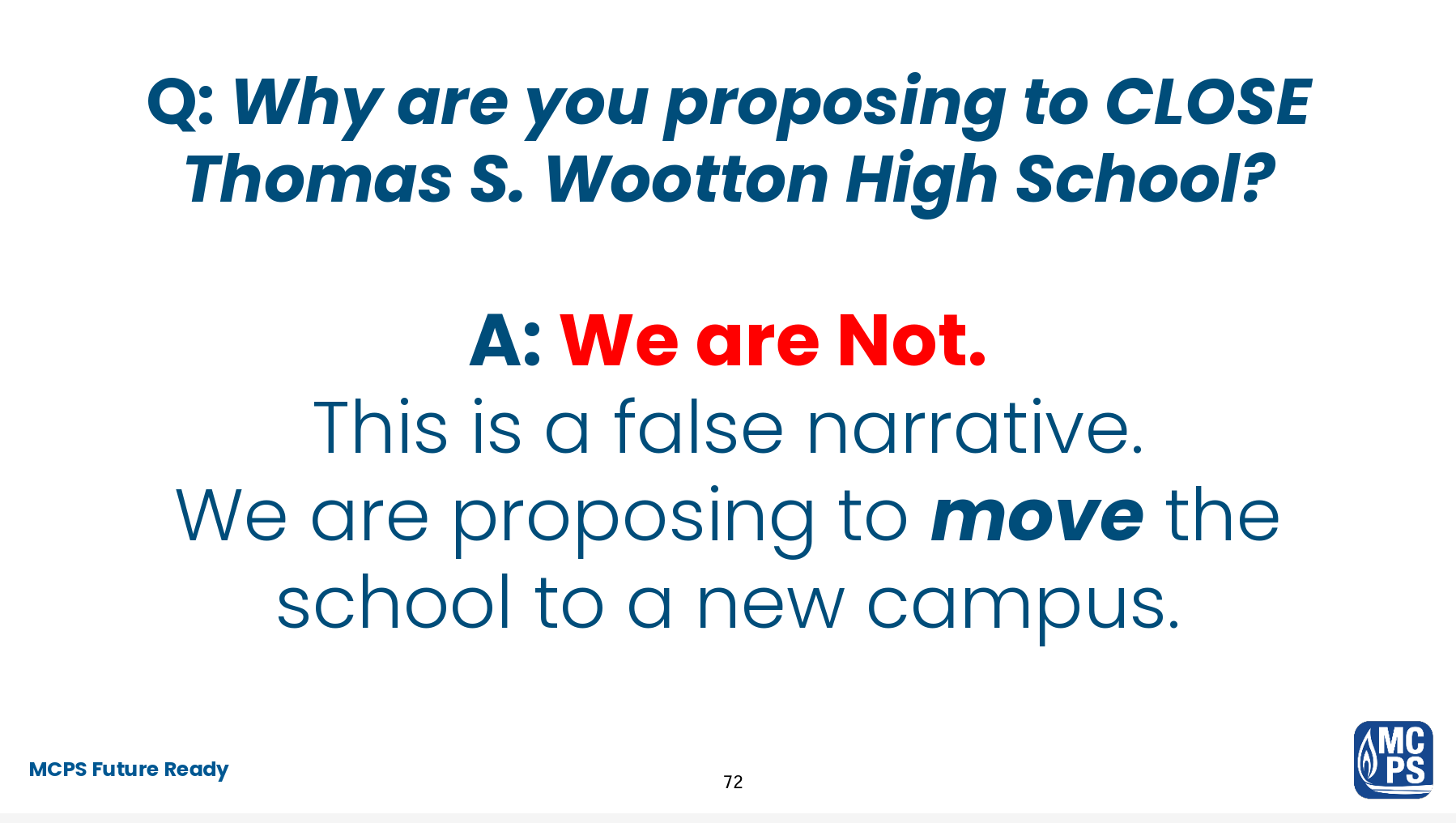
These facilities processes are substantial, diverting time and attention from what’s going on inside schools, yet still seems to erode public trust. But boundary changes may need to accelerate as enrollment shrinks, and MCPS will face even harder choices around school closures or consolidations. Will a new vendor help?
What’s up with the new vendor?
MCPS has signed a $1.5 million contract with Rockville start-up WIN-WIN AI. Their website describes the company’s premier product, No Losers Mapping, as “delivering AI-powered automatic, systematic, hydromatic, geographic, demographic infrastructure solutions. No Losers Mapping leaves all your stakeholders feeling seen, heard, and happy with their new home schools. We’ve been helping school board members get a good night’s sleep since 2025.”
April Fool’s! WIN-WIN AI is not real. The rest of this post, including FLO Analytics, is.
What’s the boundary change policy?
The Board sets policy (broad direction), and MCPS regulates (specific direction) and implements.
The MCPS Board of Education’s Educational Facilities Planning Policy FAA was last amended on September 25, 2025 and is 9 pages long. MCPS regulated that policy in Regulation FAA-RA, last updated on October 8, 2025 at 22 pages.
The most recent update to Board policy introduced a new Facilities Conditions Index (FCI), and replaced old language about Key Facilities Indicators with the FCI. The FCI is based on a narrower set of indicators about the building’s primary systems, including roofs, walls, windows, and HVAC. This conforms with the reasoning Dr. Taylor laid out when launching the Capital Improvement Plan this fall: rather than patching things here and there, his strategy is to invest in big projects with longevity.
Regulation FAA-RA lays out the guidelines for stakeholder engagement around decisions including boundary changes and school closures or consolidations. It specifies a lot about how MCPS must try to engage the public (such as through surveys or public meetings), but doesn’t include anything about how successful they must be (like what type of participation or response rates these attempts yield).
MCPS keeps saying how there were many opportunities to engage around the Wootton decision, and the community keeps saying they didn’t see it coming: both can be true.
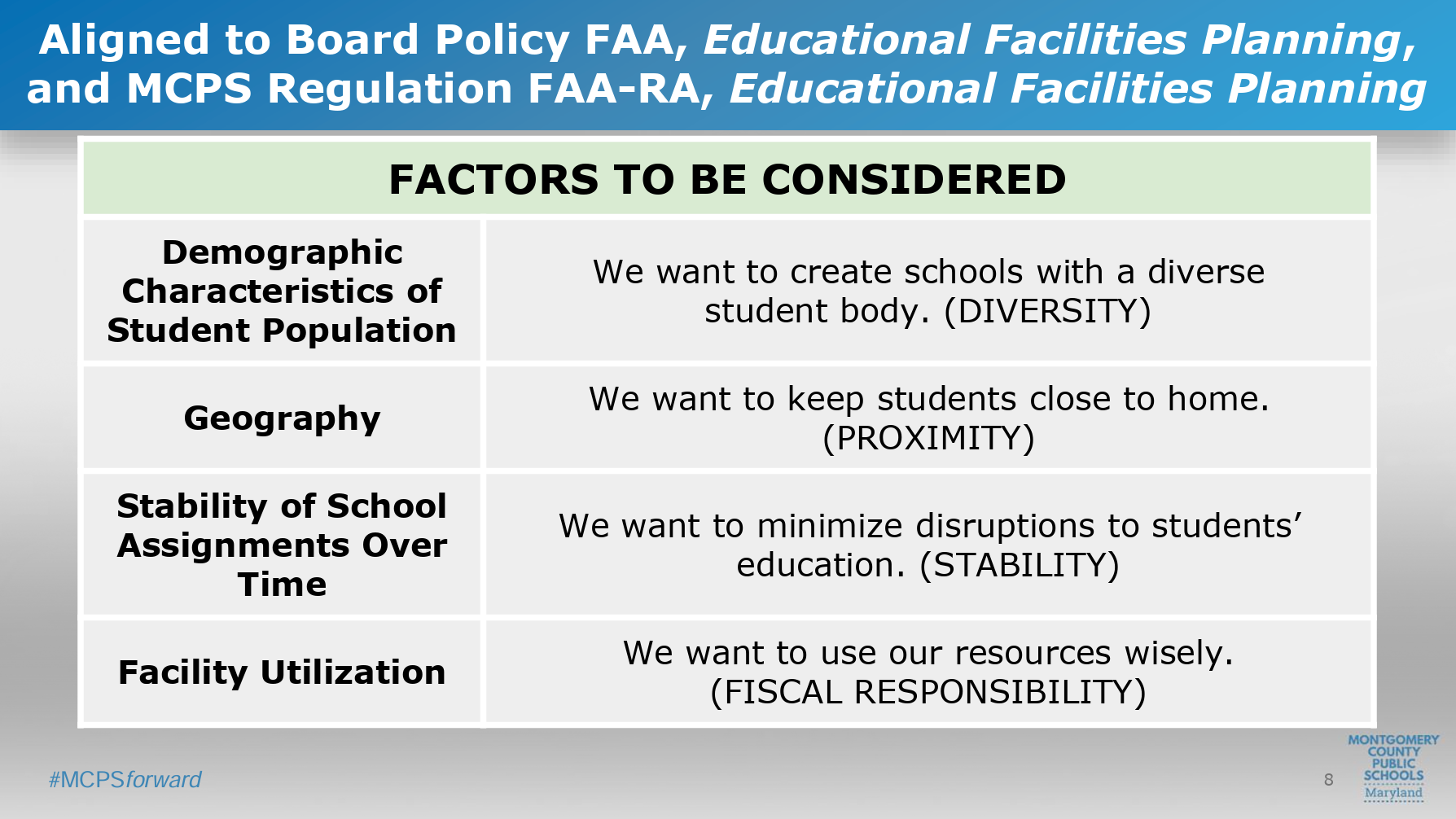
The policy and regulation set out four factors to be considered, summarized in the table below from the Nov. 4, 2025 Board of Education meeting.
What does the process look like in practice?
The process is so detailed that it’s hard to summarize. The superintendent’s website for Wootton relocation and Damascus expansion includes a 24-page process report going back to 2005, an 18-page recommendation, maps, articulation patterns, and data tables. MCPS shows with exhaustive detail how the process and decision conform to policy.
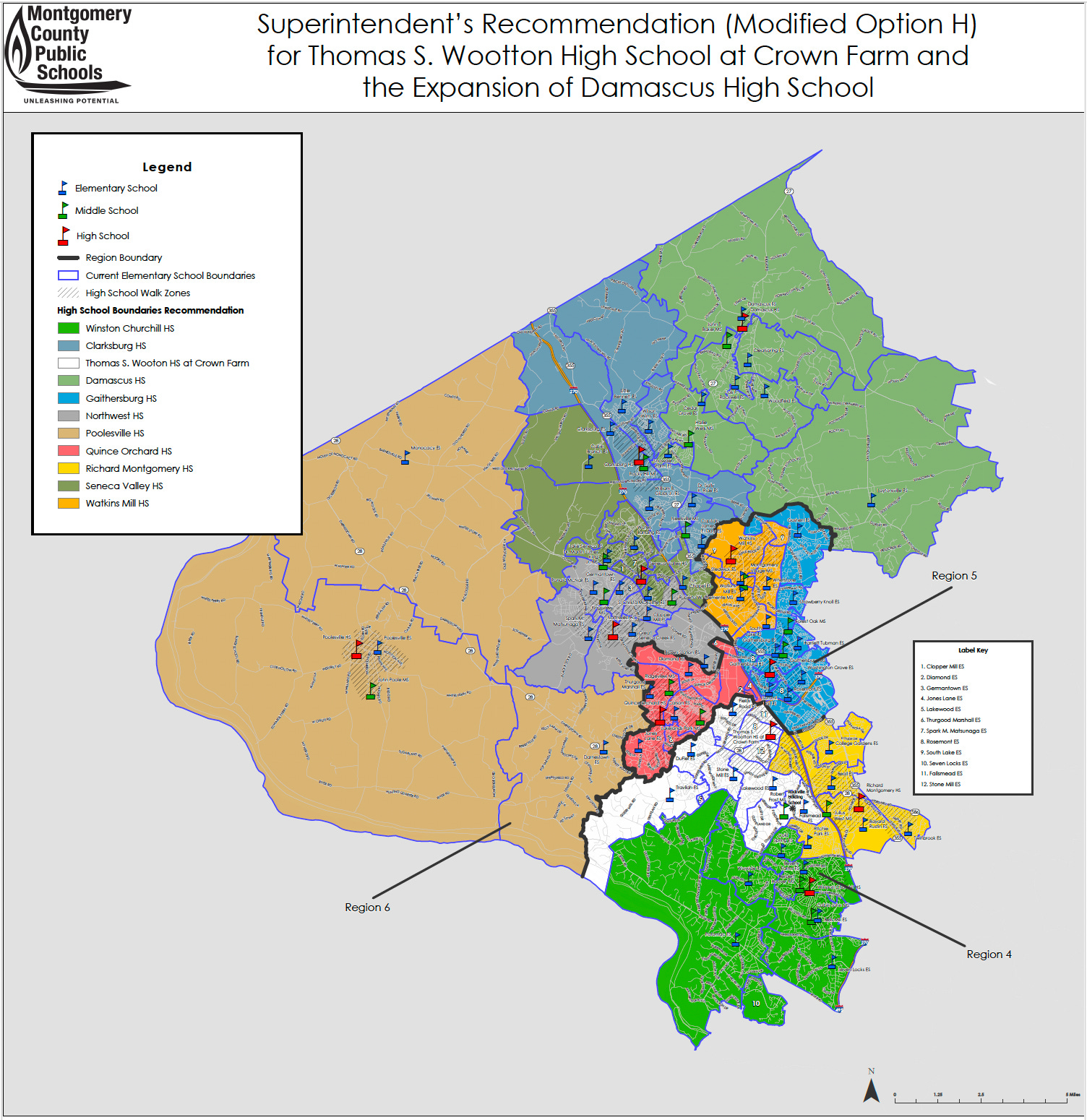
Here’s a tidbit from the process report that caught my eye:
“This resolution also included hiring a consultant to support Montgomery County Public Schools staff with the boundary study process. On September 9, 2024, a request for proposals was issued, with a deadline of October 31, 2024. The initial solicitation did not result in any proposals being submitted, and the timeline was subsequently extended. Following the extension, MCPS received one proposal. A review committee reviewed the proposal in accordance with Montgomery County Public Schools’ standard procurement procedures. On December 5, 2024, following successful contract negotiations, the Board of Education approved the contract with FLO Analytics.”
That seems weird, right?
The base contract amount was $1,120,683, with authority to spend up to $1,300,000. MCPS had revised its initial scope of work to expand community engagement.
Do boundaries really have to change?
Yes. There’s no way around it: enrollment changes and facilities depreciate, and these things don’t happen uniformly across the county’s 500 square miles. If you’re going to have residentially-based school assignment—that’s a really important “if” with lots of national discussion—boundaries will sometimes need to respond to those changes.
How is enrollment changing?
Enrollment is now declining in MCPS: from its 2019 peak, it is predicted to fall by 9 percent, or over 15,000 students, by 2031. Some of this is a national story about birth rates. Also, immigration is down, and homeschooling is up. Meanwhile, high-income school districts nationally are experiencing disproportionately greater enrollment decline post-COVID: there aren’t just fewer school-aged kids, but fewer of them are enrolled in public schools, as families who can leave public systems are doing so.
Since enrollment is declining, why don’t we just have smaller schools?
We could have smaller schools, but they would have higher per-pupil costs. How much higher would depend on operational costs and staffing models. For an extreme case, read about small public high schools in Chicago, some with per pupil costs double or triple the district’s average, despite limited offerings–and the “lack of political courage” to discuss closures.
What’s best practice for boundary changes and school closures?
Few districts are lauded for how they handle these processes–unsurprisingly, given that attendance zones feel zero-sum. Experts recommend that districts have plenty of time for engagement (though this can be in the eye of the beholder), and that they share clear criteria for decisions and related data in advance.
Just how clear could criteria be in advance, in a way that makes sense to apply to all boundary studies? MCPS Regulation FAA-RA specifies criteria but doesn’t fully operationalize or put numeric weights on the four policy factors: student demographics (to promote diversity within schools), geography, stability of school assignments over time, and facility utilization. This preserves flexibility for MCPS to incorporate other factors as they affect specific cases, but leaves lots of room for communities to feel wronged.
Is this policy and process working for MCPS?
I haven’t followed the Wootton and Woodward plans that just concluded enough to have an opinion about the outcomes, but the processes seem to hurt trust and take up a lot of time.
First, trust. When you ask for so much feedback, you inevitably can’t act on all of it–and that’s awkward. MCPS takes care to point out how they adjust plans based on community and Board feedback. They’ve also been clear that voice is not a vote (below from slides presented at the March 3, 2026 work session).
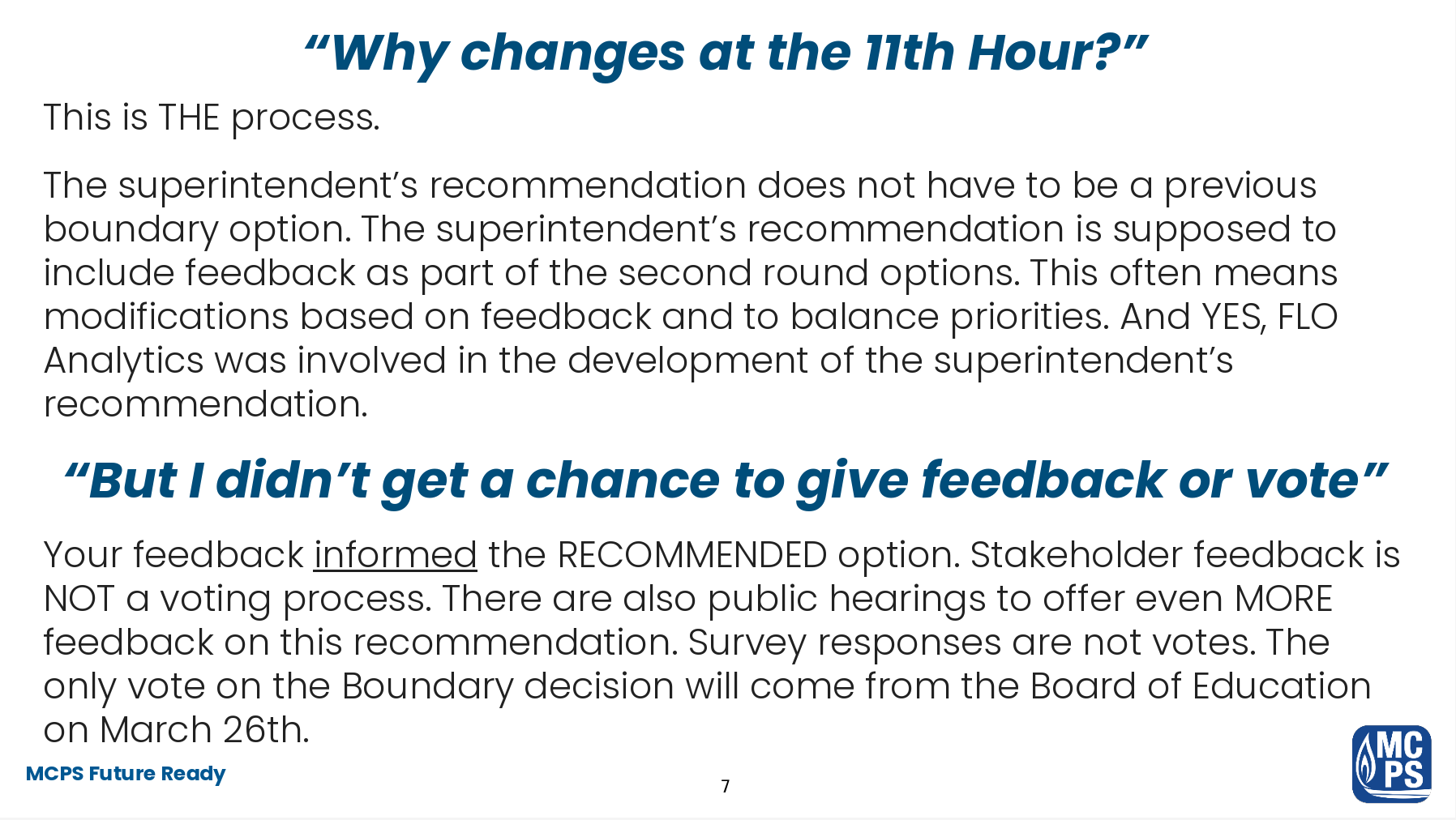
This slide surprised me. In the work session, Adnan Mamoom, Chief of District Operations, somehow managed to present it in an entirely professional manner.
Next, time. Who knows how many days or what share of Board, MCPS leadership, or advocacy time was spent on boundaries (which are tied up with the capital budget and academic programs) this year, but it was a lot. If people weren’t organizing and contacting their Board members about boundaries, might they be advocating on other educational issues? If we keep doing boundary changes the same way, will we ever have enough energy for real “stakeholder engagement” on anything besides boundary changes?
I don’t have a great feasible alternative. My dream would be something like the Base Realignment and Closure process, but I’m not optimistic that we have the trust needed to enter into such an agreement.
Ready or not, more is coming: at the March 26 meeting, the Board approved this Scope for School Consolidations and Closures Study for Elementary and Middle Schools and Countywide Elementary and Middle School Boundary Study. This year might look relaxing in hindsight.
Pop quiz
MCPS could improve its stakeholder engagement strategy for future boundary changes by:
a. Providing complete details about how the decision would be made
b. Contacting families about everything else less often so they might actually read some communications
c. Figuring out why only one contractor submitted a proposal and addressing that issue
d. b and c
e. All of the above
f. None of the above - it followed policy and that’s all that matters
Answer key
d. I support b, less frequent comms from MCPS, much of which seems like marketing rather than anything actionable. I also like c, and want to learn why only one contractor wanted this job (and only with an extension): is the job specified in an untenable way or with inadequate compensation, or did they not publicize it? But I’m not sure about option a: what complete contract could MCPS write about the various policy factors that wouldn’t lead to some dumb required decisions in the future?
Exit ticket
Share your frequent, low-stakes feedback with me, either by replying to this email or submitting anonymously. I always welcome your story ideas, questions, suggestions, and corrections. And if you enjoyed this post, I’d be grateful if you share it, however you share (social media, listserv, group chat, etc.).